
About Us

On January 14, 2026, restoration works officially begin at the Kaunas Central Post Office building – the Cultural Infrastructure Centre marks the start of the project “Modernisation and activation of the Kaunas Central Post Office” with an event and installs a symbolic time capsule in the wall. It is announced that the restoration works will continue until July 2027, and that the National Institute of Architecture will move into the building sometime later.
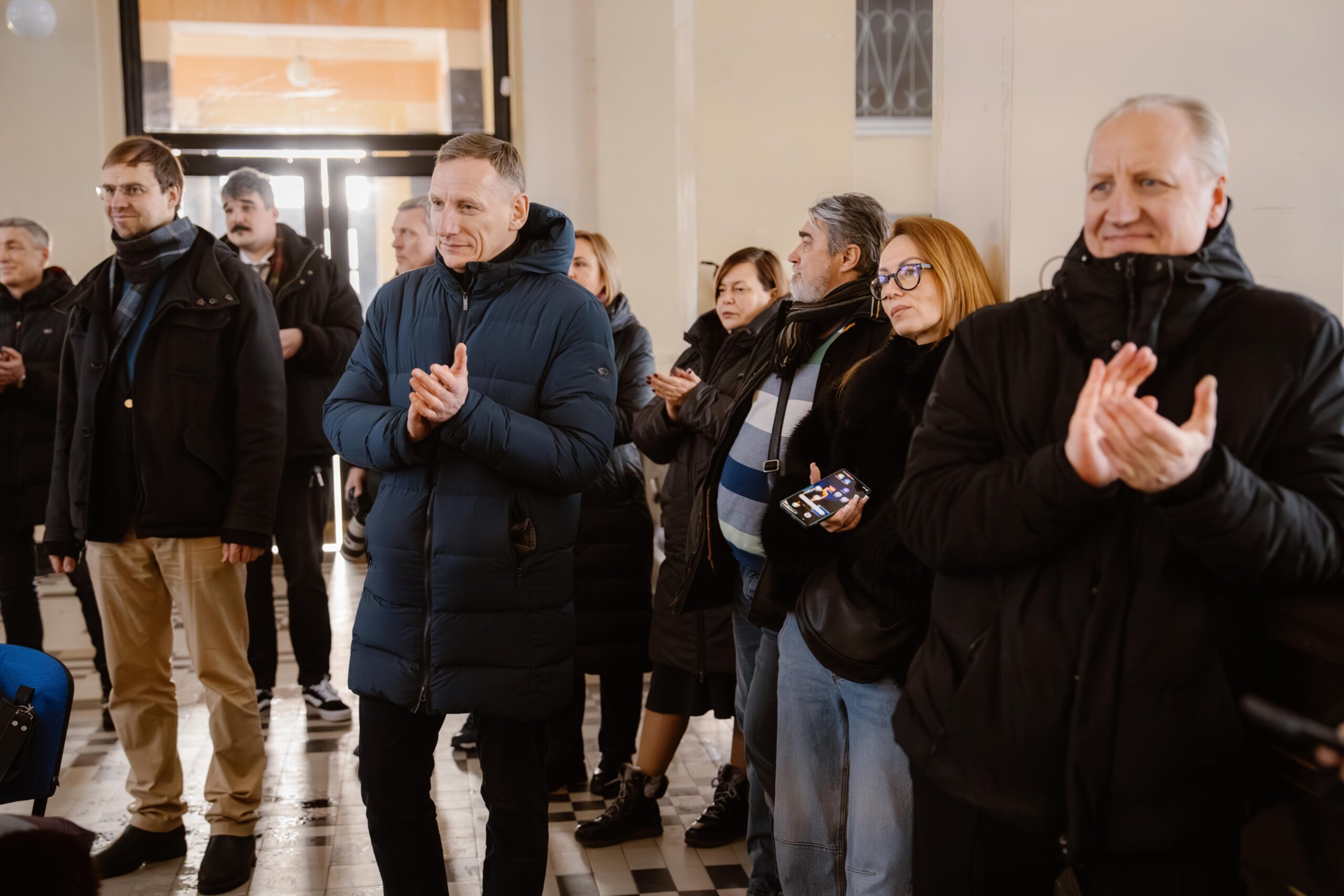
The National Institute of Architecture establishes itself in Kaunas in temporary premises at Kęstučio St. 19: an office and a reading room are set up there, with the reading room functioning as an open space for meetings and events. On April 24, the reading room hosts the send-off event for the Lithuanian National Pavilion heading to the Venice Architecture Biennale – the NAI’s first public event and a symbolic official start of the institution’s activities. In the same year, the restoration project for the post office building is prepared and procurement begins for the building’s reconstruction works.
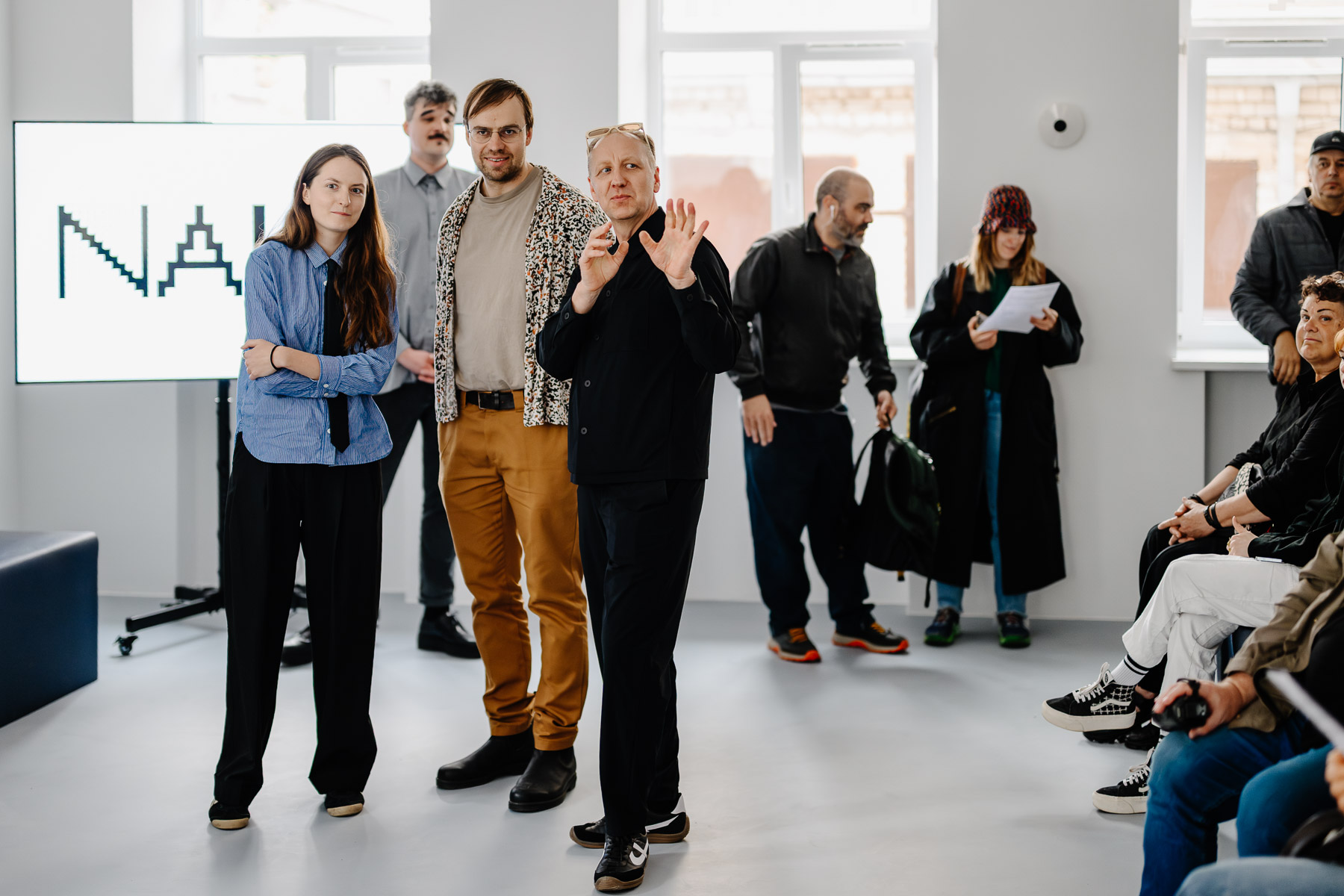
On June 4, 2024, art historian and exhibition curator Kęstutis Kuizinas wins the Ministry of Culture’s competition to lead the National Institute of Architecture – the founder and long-time director of the Contemporary Art Centre in Vilnius. In the summer, the team begins to take shape, with deputy director Viltė Migonytė-Petrulienė joining. The institute’s strategic directions are developed, and in the autumn the public is presented with plans for the building’s renovation and its future functions. At the same time, the Cultural Infrastructure Centre carries out the preparatory phase of the EU-funded project “Modernisation and activation of the Kaunas Central Post Office.”
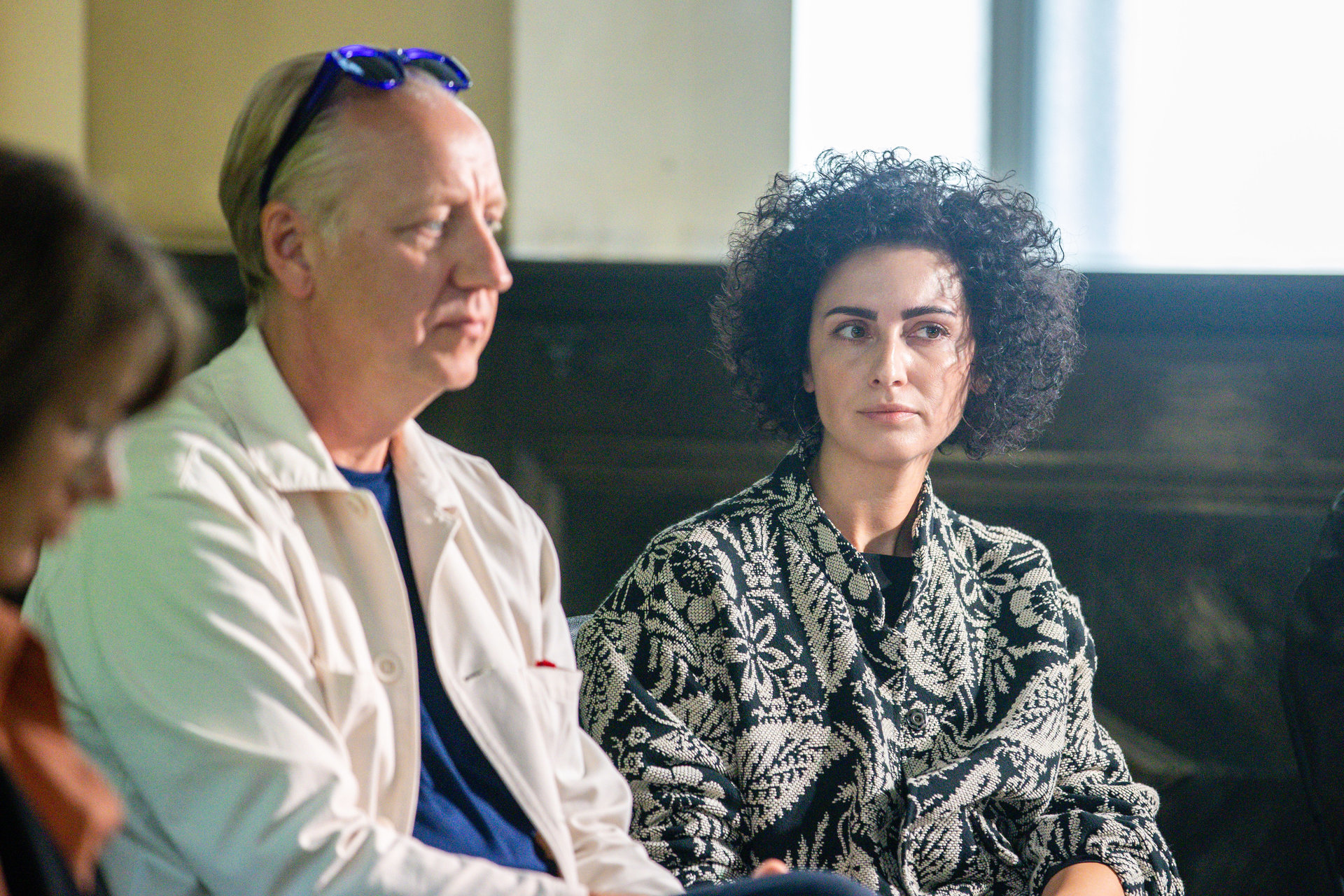
In September 2023, Kaunas’s modernist architecture, including the Central Post Office building, is inscribed on the UNESCO World Heritage List as “Modernist Kaunas: Architecture of Optimism, 1919–1939.” On December 20 of the same year, the Government led by I. Šimonytė, by Resolution No. 1004, decides to establish the National Institute of Architecture in Kaunas and allocates the former Kaunas Central Post Office building for its activities. This gives the building’s new use a clear direction and a solid legal basis.
At the proposal of the Ministry of Culture, on December 14, 2022 the Government adopts a decision to take the Kaunas Central Post Office building for public needs. The building is transferred to the Cultural Infrastructure Centre to manage under a right of trust, so that stabilisation, conservation, and repair works can be carried out and public access ensured. Both in society and at the political level, the idea of the National Institute of Architecture continues to be developed, along with its future functions and operating principles.
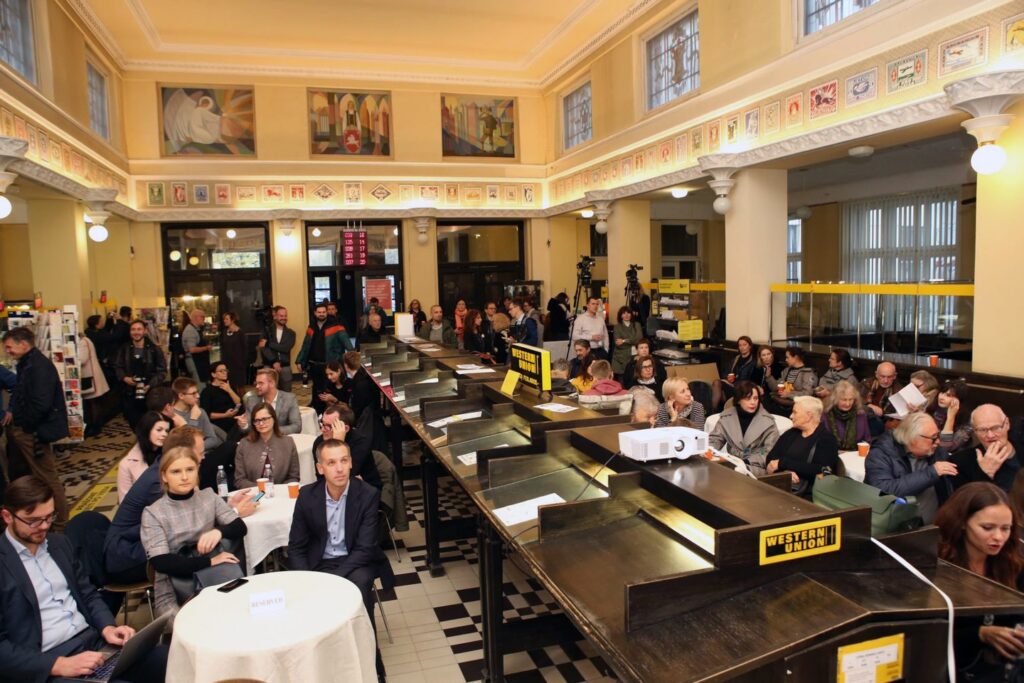
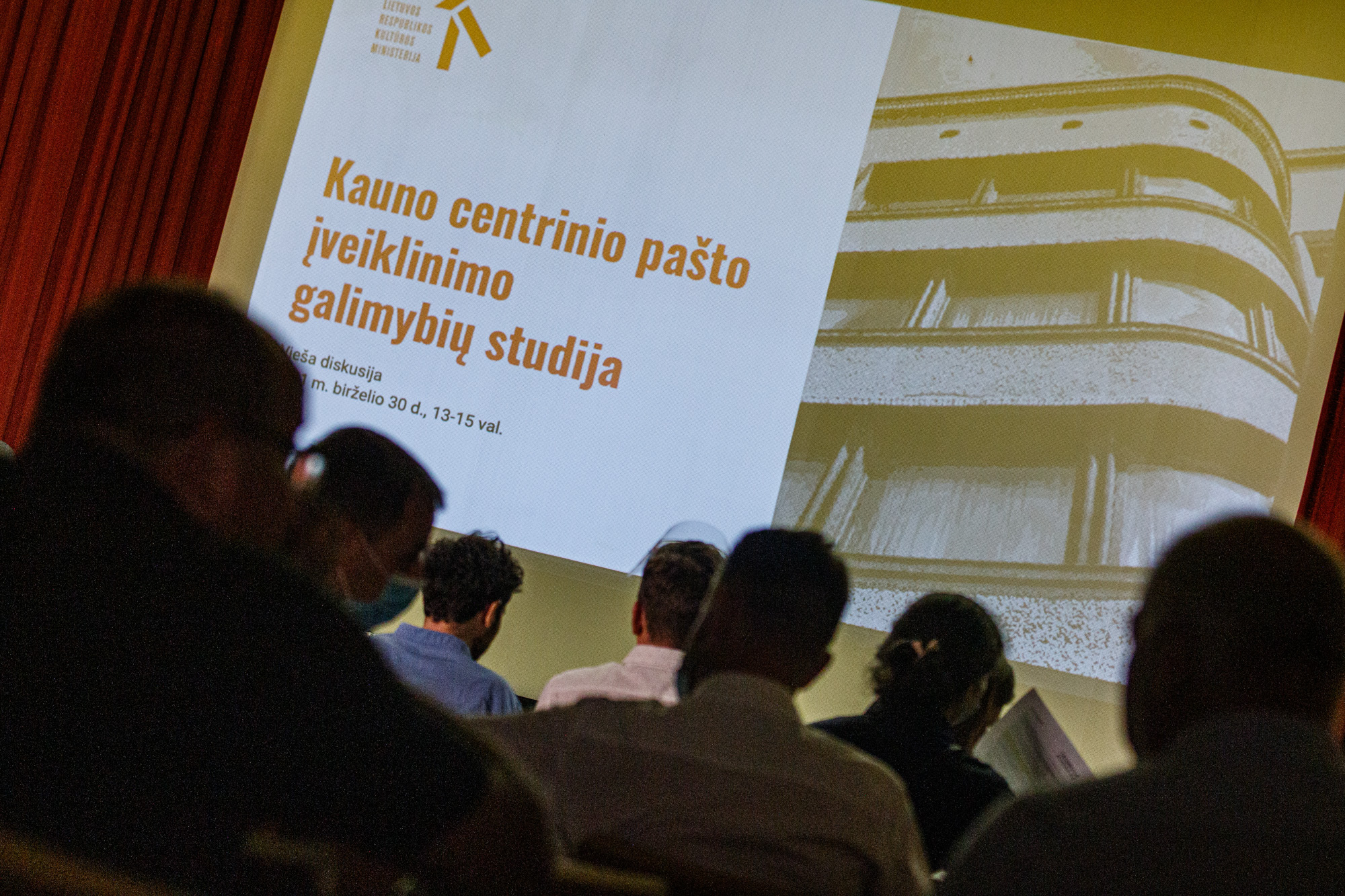
Commissioned by the Ministry of Culture, a feasibility study is launched on how to activate and repurpose the Kaunas Central Post Office. During the preparation of the study, public discussions and creative sessions are organized, and the process is coordinated by architect Dr Inga Urbonaitė-Vadoklienė. At the same time, the Cultural Infrastructure Centre assesses the building’s condition and calculates the funding needed for stabilization and conservation works. The study presents three alternatives and is completed by September. Architects, institutions, and the community are involved in the process.
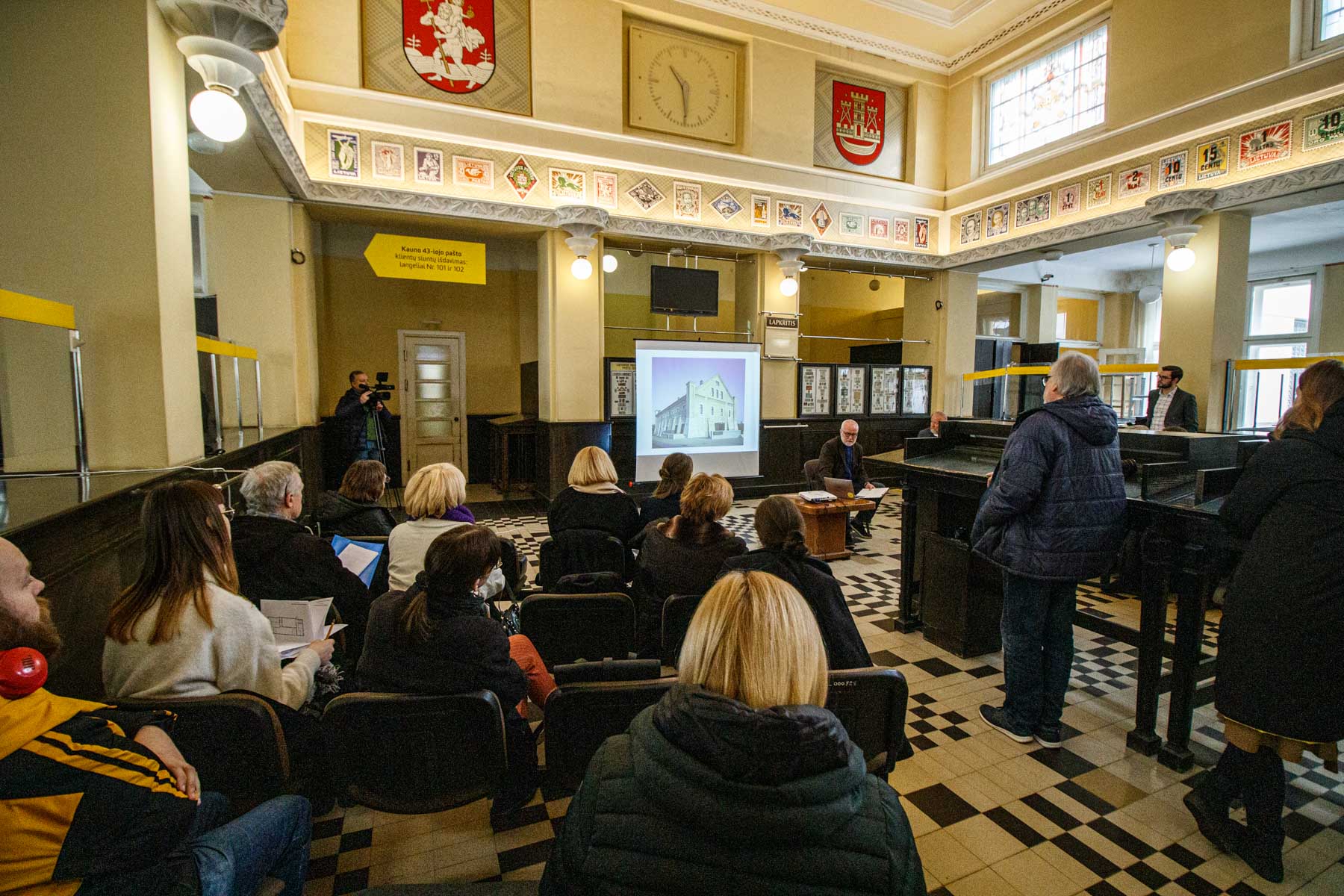
Discussions about the building’s future shift to the national level: after unsuccessful attempts to sell it and ongoing condition issues, it is publicly stated that the building needs a clear state strategy. A working group formed by the Ministry of Transport and Communications discusses possible scenarios and endorses the idea of establishing an architecture center-museum in the building. At the same time, the “Paštininkai” group continues its advocacy, and in the public sphere the view strengthens that the site must be preserved and adapted for public needs.
After AB “Lietuvos paštas” moves out of the historic Kaunas Central Post Office building and announces plans to sell it, members of the architectural community and cultural field activists form the civic movement “Paštininkai” (“Postmen”). The group sets the goal of preserving the building designed in 1932 by Feliksas Vizbaras and opening it to the public – as a center for architecture, design, and urban culture. In the autumn, the first visions for repurposing the building are presented and a consistent, long-term public campaign begins.

“Paštininkai” (en. “Postmen”) is an initiative group of active Kaunas residents which, in 2019, as discussions about the future of the Kaunas Central Post Office began, took on not only protest rhetoric but also very concrete work: it brought together more than 20 professionals from different fields, organized creative workshops, applied design-thinking methodology, and developed several realistic scenarios for activating and repurposing the building. Their core idea was an architectural institution – ranging from an architecture museum and exhibition spaces to the “Post:Vizbaras” cluster with the idea of a National Museum of Architecture and Design.
Later, when “Lietuvos paštas” announced plans to sell the building at auction, “Paštininkai” publicly pressured city and state institutions to take responsibility more quickly, proposed possible activities, and helped shift public perception of the building as a cultural and architectural platform rather than merely a commercial property. This direction today aligns with the official decision: the Kaunas Central Post Office is being adapted for the National Institute of Architecture to operate as a contemporary cultural center of national and international significance.
“Paštininkai”: Kęstas Vaikšnoras, Linas Tuleikis, Kęstutis Zaleckis, Ingrida Veliūtė, Jolita Kančienė, Dainius Lanauskas, Andrijana Filinaitė, Andrius Ropolas, Vaidas Petrulis, Audrys Karalius, Jurgita Šiugždinienė, Gediminas Banaitis-Skrandis, Žilvinas Rinkšelis, and others.
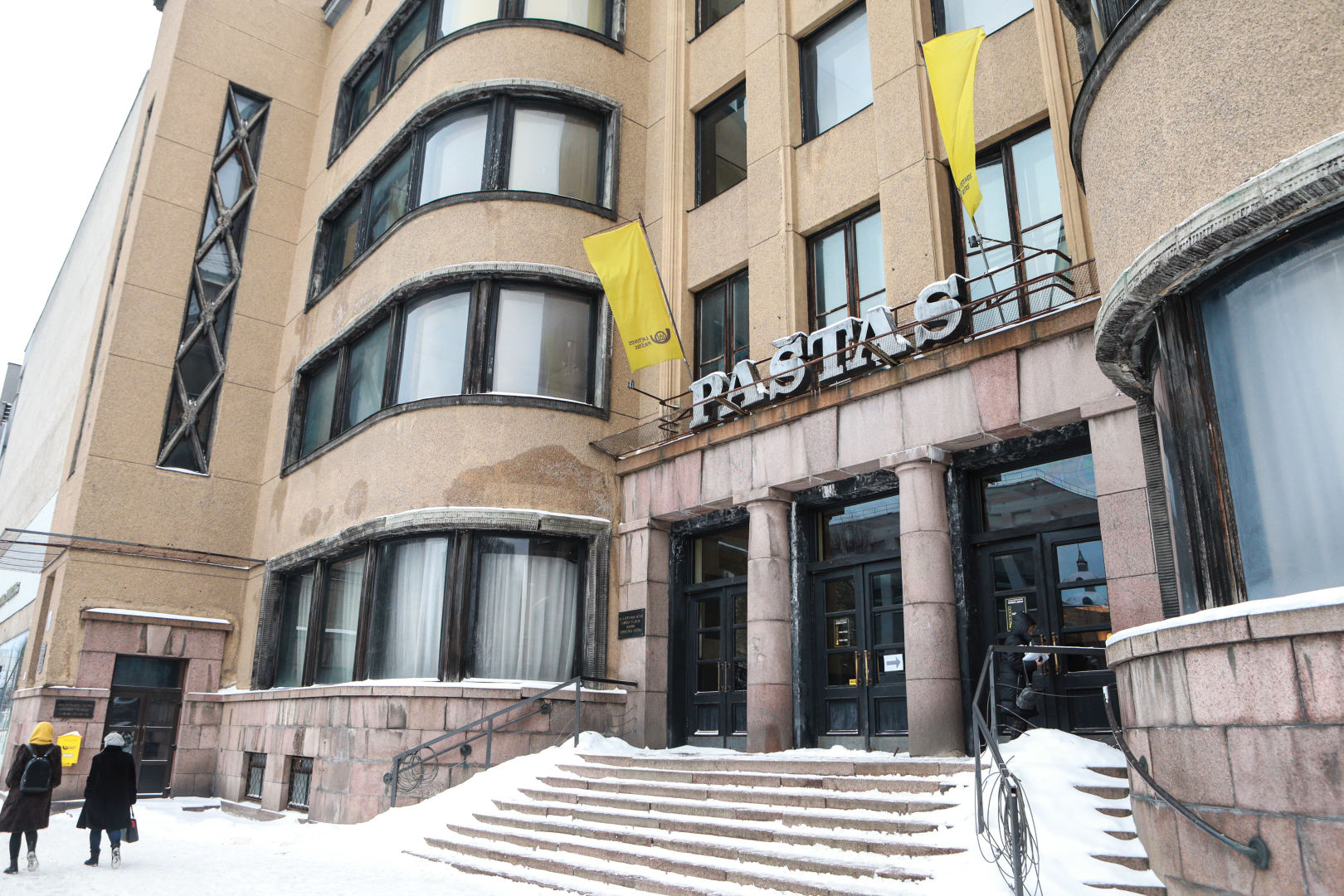
One of the most important elements of the future National Institute of Architecture’s exhibition is the institution’s home itself. The Institute has been entrusted with a major responsibility: to give purpose and life through its activities to one of the most significant examples in the history of modern Lithuanian architecture – the historic Kaunas Central Post Office building. A building that once, through its architecture, represented Lithuania and the Temporary Capital and their modernization will become a place where Lithuanian architecture is presented and fostered.
To look at the origins of the building, we should go back to the third decade of the last century: the rapidly growing needs of the country’s main city required new post office premises. Until then, the functions of various departments had been scattered across several different locations, and the existing facilities were poorly suited to the ever-increasing correspondence needs of the Temporary Capital. In 1929, as preparations approached for the commemoration of the anniversary of Vytautas the Great’s death, a final decision was made to build new premises that would serve both as the home of Kaunas Central Post Office and of the national Post Administration itself.
The first design was prepared in 1929 by Kleopas Gaigalis, an engineer at the Post Administration, but soon engineer Feliksas Vizbaras was invited to design the building. The architect created a structure that blended organically into the existing development along the city’s central street, combining modernist architecture with explorations of the so-called “national style.” In the architect’s own words, the design aimed to meet “the requirements of modern construction today: more space and light, a clear division of premises, and avoiding unnecessary so-called architectural embellishments.”
The building’s restrained decoration primarily reflects interpretations of folk art: the window surrounds were designed with inspiration from traditional wood carving; the vestibule and hall floor tiles were laid out using motifs from tablecloth patterns; and the molded ornamentation in the operations hall was inspired by patterns found on a folk necktie. The operations hall was also decorated with a frieze featuring a painted anthology of postage stamps from the first decade of independence (artist Petras Kalpokas), three paintings by Kazys Šimonis, and stained-glass windows depicting the coats of arms of Vilnius, Grodno, and Klaipėda.
The Central Post Office building consists of sections for public services, administration, and mail sorting. The configuration of the public part of the building – where an просторный vestibule leads into three separate spaces intended for different functions – was inspired, according to F. Vizbaras, by the traditional Lithuanian home and by what he described as “the Lithuanian’s customary desire to have a clear situation.”
Along the central axis was the main operations hall. To the left of the vestibule was the financial services department, where postal and telegraph money transfers and insured letters were accepted and paid out. On the right were the telegraph cashier, telephone booths, and a railway ticket office. In the Laisvės Avenue wing, the second to sixth floors housed the post office and the Post Administration’s offices and various departments.
Parcels were accepted and handed out in the northern wing, accessed deeper into the plot from E. Ožeškienė Street. Although the architect justified this decision as a way to relieve the city’s central street of “drivers and carts loaded with boxes and sacks, and the rather poorly dressed red-capped porters,” the separation of parcel services from the building’s other public functions was criticized in the press.
In addition to parcel services, the rear wing housed the postal dispatch unit as well as the departments for ordinary and registered correspondence and periodicals. There was also a spacious customs room there – before the construction of the building, customs procedures had been carried out separately.
Construction of the Central Post Office building was completed toward the end of 1931. By the end of that year, the city’s main post office had already moved in, and at the very beginning of 1932 the Post Administration of the Ministry of Transport and Communications followed. The ceremonial opening began on the morning of January 8 that year, with the building being blessed by Fr. Juozas Tumas-Vaižgantas. In keeping with the spirit of the time, it was strongly emphasized that the building’s creation relied almost entirely on Lithuanian materials, as well as Lithuanian design, technological, and construction capacities. It became one of the most modern and luxuriously fitted public buildings in Lithuania, and a symbolic moment when modernist architecture was accepted as suitable for public representation at the highest level.
Team
Objectives
- Strengthen Architecture as an art form and its expression – opening up spaces for exhibitions, events, and innovative ideas that shape the future face of architecture.
- Connect Lithuania and the world through architecture, sharing Lithuanian architectural art internationally and introducing global trends locally.
- Nurture Architectural heritage by collecting, researching, and contextualising architectural history, with a particular focus on Kaunas interwar modernism, through museum collections and research, and by integrating heritage into the contemporary built environment.
- Celebrate Architectural art by organising presentations, awards, and other events at both local and international levels.
- Encourage The development of architectural policy and heritage-conservation ideas, promoting the creation of a sustainable, high-quality built environment.
- Be Part of Europe’s architectural discourse by participating in the New European Bauhaus and other major international initiatives.
- Spread Knowledge by initiating and publishing architecture-related publications, organising educational activities, and ensuring access to key architectural resources for different groups in society.
- Support Creative mobility by running architecture residencies, encouraging exchanges among architects and creative professionals, and creating conditions for collaboration and experimentation.
1. Bridges for Architectural Art and Innovation
To foster the development of architectural art by creating opportunities for contemporary exhibitions, events, and innovative ideas – strengthening Lithuania’s ties with the world, showcasing the country’s architecture on the international stage, and inspiring today’s and tomorrow’s creators.
This strategic direction aims to foster the development of architectural art by opening up opportunities for exhibitions and events that place contemporary architecture in a global context. The main goal is to strengthen Lithuania’s ties with the world, showcase the country’s architecture on the international stage, and inspire creators across both present and future generations. Through international formats such as exhibitions, conferences, and creative workshops – which not only present innovative architectural projects but also encourage intercultural exchange and collaboration – architects and other creators will share ideas, discuss global trends in architecture, and develop joint projects.
▞▞▚▞▝ ▚▐
2. Heritage as a Cultural Reference System and a Source for Contemporary Creation
To foster architectural heritage, especially Kaunas modernism, by integrating this unique cultural layer into the contemporary environment and shaping Lithuania’s image as a sustainable and socially responsible country.
This direction focuses on architectural heritage, with particular attention to Kaunas modernist architecture. The goal is not only to preserve this unique cultural layer, but also to give it new life – strengthening Lithuania’s image as a sustainable and socially responsible country. Here, heritage is not just a historical artefact, but a source of creative energy – something to draw inspiration from and to develop contemporary projects that also foreground historical value.
▞▞▚▞▝ ▚▐
3. A Platform for Creative Mobility and Knowledge Sharing
To cultivate creative collaboration and experimentation, setting new precedents for knowledge sharing, education, and inspiration – strengthening the architectural community and ensuring access to valuable creative resources for all.
This direction is dedicated to creative collaboration, the exchange of ideas, and supporting creative initiatives, ensuring that the architectural community has opportunities to share knowledge, learn, and inspire others. Such collaboration, encouraged both locally and internationally, will give creators opportunities to grow – while enriching and strengthening the architectural community. The outcomes will be accessible to all groups in society through educational programmes, creative workshops, and seminars.
The National Institute of Architecture Council is a 12-member advisory body, appointed for a three-year term by order of the NAI Director. The Council reviews the organisation’s strategic directions and provides recommendations to the Institute and the Ministry of Culture, assesses performance results, and proposes improvements. The Council includes cultural and environmental policy-makers, delegates from professional organisations, academics, representatives of the NGO sector, and the NAI Director.
Council composition:
Reda Aleliūnaitė – Adviser in the Professional Arts and Internationalisation Policy Group; delegated by the Ministry of Culture.
Asta Rokickienė – Head of the Architecture and Construction Policy Group at the Ministry of the Environment.
Gintaras Balčytis – architect, Chair of the Lithuanian Architects’ Association.
Lukas Rekevičius – architect, member of the Council of the Lithuanian Chamber of Architects; head of the “Aketuri architektai” studio.
Vainius Pilkauskas – landscape architect, Chair of the Lithuanian Association of Landscape Architects.
Dr Lolita Jablonskienė – art historian, exhibition curator, Associate Professor at the Vilnius Academy of Arts.
Dr Liutauras Nekrošius – Associate Professor at the Faculty of Architecture, Vilnius Tech.
Dr Jūratė Kamičaitytė – Professor at the Faculty of Civil Engineering and Architecture, Kaunas University of Technology (KTU).
Dr Marija Drėmaitė – architectural historian, Professor at Vilnius University, exhibition curator.
Dr Jūratė Tutlytė – Associate Professor at the Faculty of Arts, Vytautas Magnus University (VDU), author of architectural research.
Simona Didvalytė – Director of the non-profit organisation “Architektūros fondas”.
Kęstutis Kuizinas – art historian, exhibition curator, Director of the NAI.