
The National Institute of Architecture (NAI), established by the Ministry of Culture, has selected its logo and visual identity, the Institute said in a press release. The open competition was won by the design and architecture studio Acid, which received the highest number of votes from the selection committee.
NAI reports that 43 participants registered for the logo and visual identity competition organised by the Institute, submitting a total of 56 proposals.
“I am pleased that the committee, by consensus, chose Acid’s bold, compelling, and meaningfully multi-layered design solution. What impressed me is that it does not have the usual institutional closedness or a cautiously constructed identity; instead, it is playful, associative, and invites people to engage and act together. I believe that NAI’s easily recognisable and flexibly applicable logo will stand the test of time and will lay strong foundations for the visual communication of this newly established institution,” said Kęstutis Kuizinas, Head of NAI.
Inspired by interplay of modernism and national style
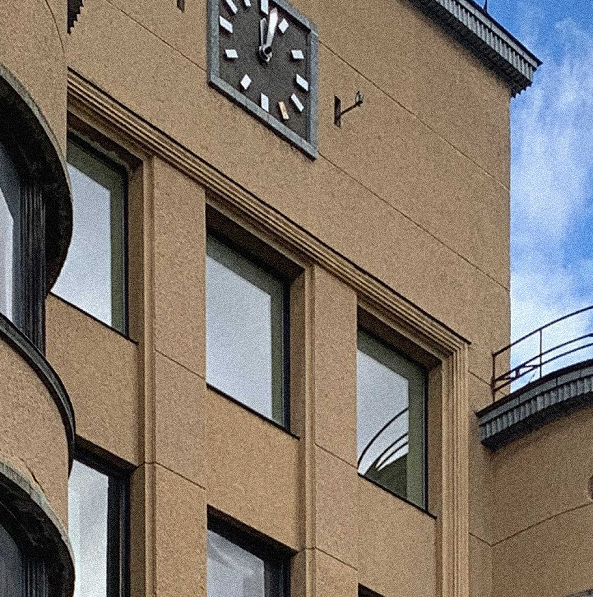
As the authors of the visual identity note, one of their sources of inspiration was one of Kaunas’ best-known buildings – the Kaunas Central Post Office – where NAI will be based after the reconstruction.
The winning studio Acid consists of designer and art historian Rokas Sutkaitis and architect and designer Julius Seniūnas, who work globally with both business and cultural clients. They have also created the visual identity books for Kaunas – European Capital of Culture 2022 and the Lithuanian Design Association.
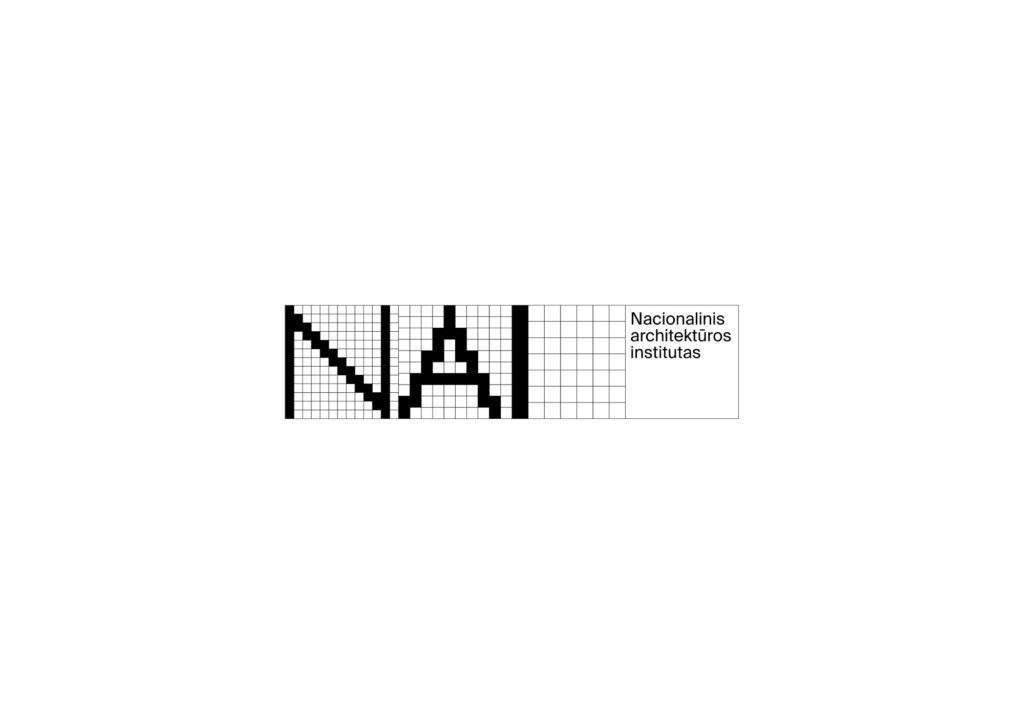
“Our work reflects the interplay between interwar modernism and the ‘national style’, inspired by the interior of the Kaunas Central Post Office. Motifs of black-and-white folk patterns are transferred into a modernist context, where they become a dynamic part of the graphic system, connecting tradition and contemporaneity,” said R. Sutkaitis, partner at Acid.
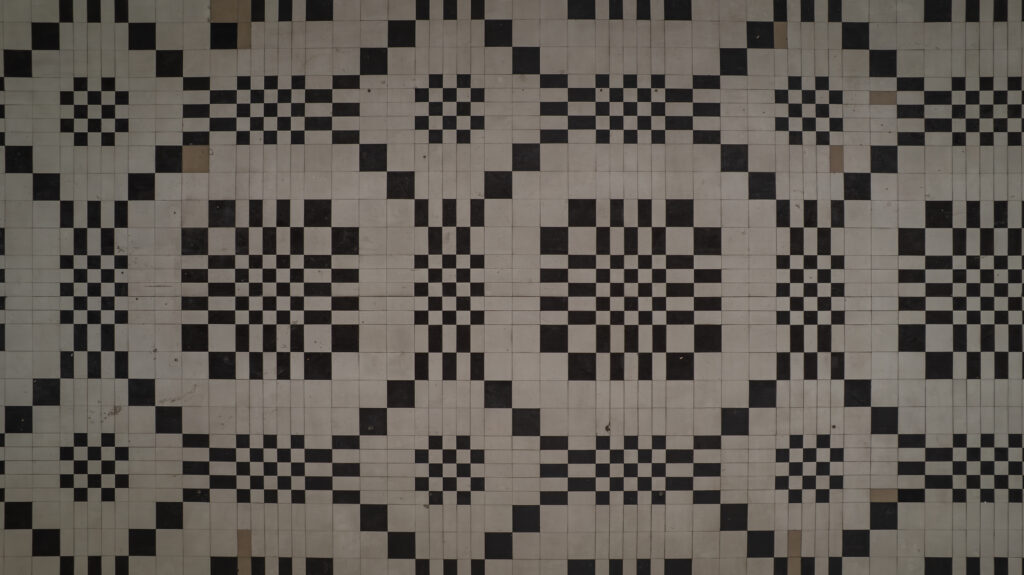
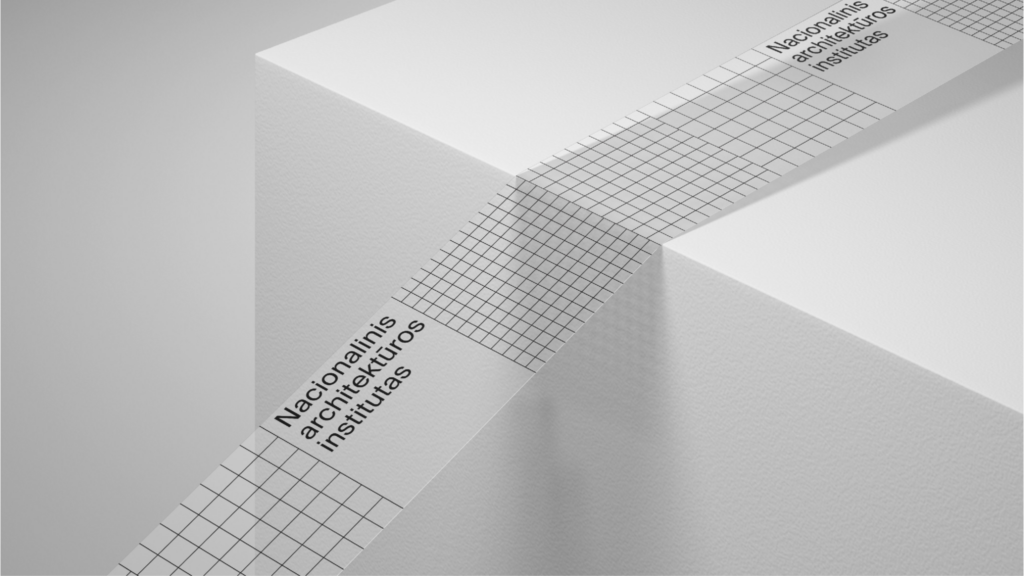
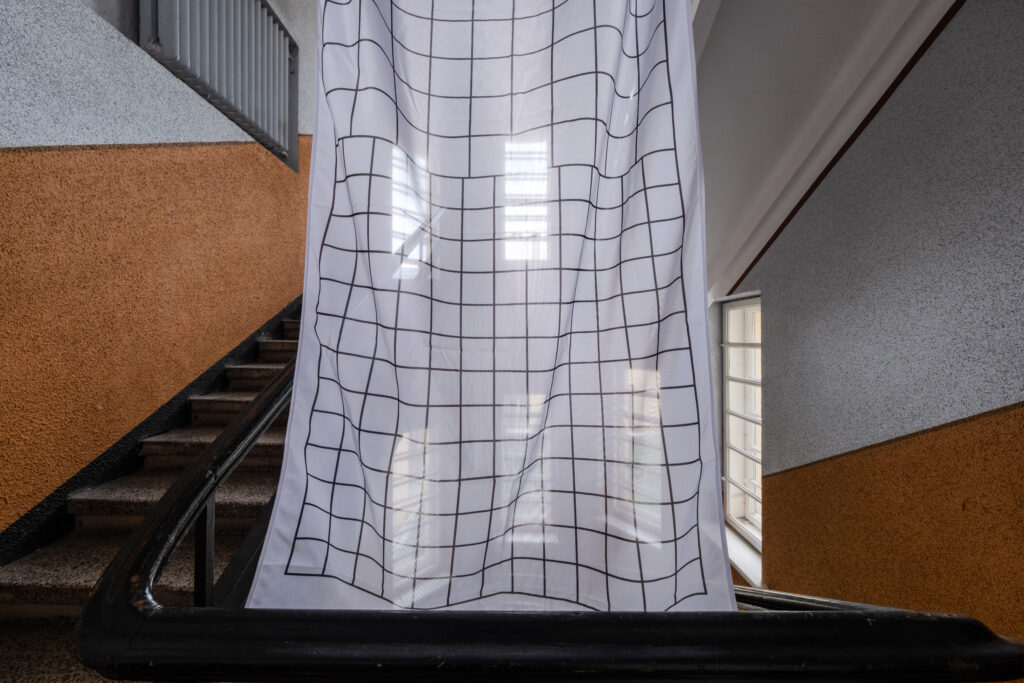
A grid-based principle underpins the entire visual system, allowing it to adapt to different media and scales. The graphic elements used in the mark are placed within four grids of different scales, which progressively grow from the smallest to the largest.
According to R. Sutkaitis, the identity created by Acid conveys the institution’s bold, open, and international character: “It is a harmonious link between tradition and contemporaneity, enabling effective communication across architectural scales – from the smallest scale of the human environment (furniture, interiors) to the most comprehensive architectural scales (urbanism, architectural history, and theory).”
Winner selected by a commitee
The competition was open to creative agencies as well as individual professionals in architecture, graphic design, and communication – or groups of such professionals.
The concepts submitted had to be grounded in the objectives and functions set out in NAI’s statutes and represent the institution’s vision: to reflect a strong and competitive international identity alongside a distinctive local identity, and to communicate the nature of an institution that performs the functions of an exhibition centre and a museum.
All participants and their proposals were anonymised: when evaluating each logo, the committee did not know the authors or their contact details.
The five-member evaluation committee included: Audrius Klimas, Professor at the Department of Graphic Design of the Vilnius Academy of Arts; Giedrė Lisauskaitė, Board Member of the Lithuanian Design Association; Lukas Rekevičius, Founder and Partner at Aketuri architektai; Kęstutis Kuizinas, Head of the National Institute of Architecture; and his Deputy, Viltė Migonytė-Petrulienė.
To be based in the Kaunas Central Post Office
The National Institute of Architecture is a state budgetary institution. Its purpose is to foster the development of Lithuanian architectural art; present architecture in Lithuania and abroad; present international trends in architectural art in Lithuania; and collect, preserve, and research museum values related to Lithuanian architectural art and architectural heritage.
It is planned that the Institute will organise exhibitions, seminars, lectures, and other events on architectural art and architectural heritage; establish awards for architectural art; seek to involve the public in urban planning processes; and collect and present statistical information on architectural art relevant to society.

The new budgetary institution is also expected to conduct research on architectural art and heritage; publish and distribute research, educational, informational, and promotional publications; and present Lithuanian architecture abroad.
The Institute is planned to open in the former Kaunas Central Post Office building, with the reconstruction scheduled to be completed by spring 2027.